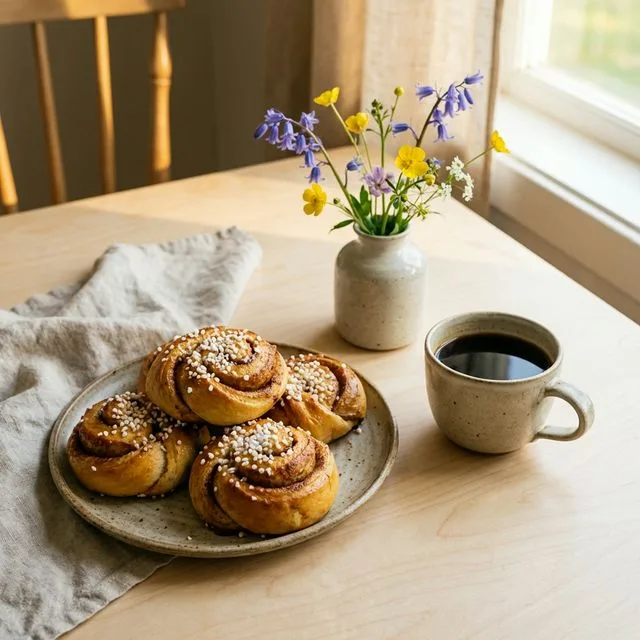
Walk into any Swedish workplace around 10 AM or 3 PM, and you'll notice something different. Work stops. People gather in the break room. Coffee is poured, something sweet appears, and for the next 15 or 20 minutes, the focus shifts from productivity to connection.
This is fika, and it's one of Sweden's greatest cultural exports.
What Is Fika?
At its simplest, fika is a coffee break. But that translation misses the point entirely. Fika is an institutionalized pause, a moment deliberately carved out of the day for restoration and social connection. It's both a verb ("ska vi fika?" - shall we have fika?) and a state of mind.
You don't grab a coffee to go and drink it while working. You don't check your phone while having fika. You sit down, you slow down, and you connect with the people around you or simply enjoy a moment of quiet.
The Swedish government even has fika breaks written into some labor agreements. That's how seriously this tradition is taken.
More Than Caffeine
Fika serves a deeper purpose than just delivering caffeine and sugar into Swedish workers. It's a social leveler. In the fika room, hierarchies soften. The CEO pours coffee for the intern. The senior developer chats with the receptionist. For those 15 minutes, everyone is just people sharing a break together.
This isn't accidental. Swedish culture values equality and consensus, and fika reinforces these values daily. When you regularly sit down with colleagues across all levels of an organization, communication improves, relationships strengthen, and workplaces become more humane.
Beyond the workplace, fika is how Swedes maintain friendships and family connections. Inviting someone for fika is meaningful. It says "I value your company enough to give you my full attention for a while." In our distracted, hurried world, that's a rare gift.
The Classic Fika Menu
While fika is about much more than food, the treats certainly matter. Swedish baking traditions have evolved specifically around fika, creating a whole category of baked goods designed to pair perfectly with coffee.
Kanelbullar (cinnamon buns) are the undisputed king of fika. These aren't the massive, frosting-covered creations you might know. Swedish kanelbullar are smaller, less sweet, with pearl sugar on top and a perfect balance of cardamom and cinnamon. They're meant to complement coffee, not overwhelm it.
Kardemummabullar (cardamom buns) are kanelbullar's sophisticated cousin. Less cinnamon, more cardamom, and absolutely divine with a strong cup of black coffee.
Chokladbollar (chocolate balls) are no-bake treats made from oats, cocoa, sugar, butter, and coffee, rolled in coconut or pearl sugar. They're easy to make and utterly addictive.
Drömmar ("dreams") are small, delicate cookies that melt in your mouth. The name comes from their light, dreamy texture.
Prinsesstårta (princess cake) is for special occasions - layers of sponge cake, jam, custard, and whipped cream under a smooth layer of green marzipan. It's definitely not an everyday fika treat, but it represents Swedish baking at its most celebratory.
The key to all fika baking is balance. Nothing is too sweet, too rich, or too large. These treats are designed to be enjoyed frequently without being overwhelming.
Making Time for Fika
The genius of fika isn't the coffee or the baking. It's the decision to stop. In cultures that glorify constant productivity, the idea of mandated breaks can feel radical. But Sweden has figured out something important: regular pauses make people more productive, more creative, and happier.
You don't need a Swedish workplace to practice fika. You just need to decide that breaks matter. That connection matters. That slowing down, even briefly, is valuable.
Start small. Tomorrow at 10 AM, make yourself a proper cup of coffee or tea. Not in a to-go cup. In a real cup. Sit down. Put your phone in another room. If you have something homemade to eat with it, great. If not, a few cookies from the store work fine. The important part is stopping.
If you work with others, suggest a daily fika break. It doesn't need to be elaborate. Coffee and store-bought cookies are perfectly fine. The point is gathering, pausing, and connecting.
At home, fika can become a family ritual. After school, before homework starts - coffee or milk, something sweet, and 20 minutes of just being together and talking about the day. No screens, no rushing, just presence.
The Social Contract
Fika has unwritten rules. You don't schedule meetings during fika time. You don't bring work to the fika table. You contribute to the conversation, but you also listen. You take your turn making coffee and cleaning up.
These rules might seem small, but they create a container for genuine connection. By agreeing that this time is different, set apart from productive work, you free people to actually rest and connect.
In Swedish offices, there's often a fika schedule where different people take turns bringing treats. This distributes the work and ensures variety. Some people bake, others buy. Nobody judges. The important thing is that everyone contributes to maintaining the tradition.
Baking for Fika
If you want to bake for fika, keep it simple. The best fika baking is reliable, not fussy. You want recipes you can make while chatting with a friend or half-watching a movie. Recipes that work every time. Recipes that taste better when shared than hoarded.
Kanelbullar definitely take practice, but kardemummabullar, chokladbollar, and drömmar are all beginner-friendly. Many Swedes have been making these since childhood. They're comfort baking - recipes so familiar that you can make them without really thinking.
The smell of baking fills your home with warmth and welcome. When people arrive for fika and smell fresh baking, they know they're valued. That's worth more than perfect technique or Instagram-worthy presentation.
Beyond Sweden
Fika is spreading beyond Swedish borders, and for good reason. In a world that moves too fast and demands constant connectivity, the idea of regular, guilt-free breaks feels revolutionary.
You don't need to do it perfectly. You don't need Swedish baked goods or even coffee. You just need to commit to stopping, to being present, to valuing rest and connection as much as productivity.
Maybe it's morning tea with a biscuit. Maybe it's afternoon coffee with your partner or roommate. Maybe it's a weekly standing date with a friend where you just sit, drink something warm, and catch up. The format matters less than the intention.
Find a rhythm that works for you. Daily is ideal, but even a few times a week makes a difference. The point is creating space in your life for simple pleasure and genuine connection.
In Sweden, they've known this for generations: the best investment you can make in productivity, creativity, and wellbeing is to regularly stop producing and just be. Fika isn't a luxury. It's essential.
So tomorrow at 10 AM, make yourself a proper coffee. Sit down. Take 15 minutes. See how it feels. You might just start a new tradition.
Keywords: fika, Swedish culture, coffee break, Swedish baking, social tradition, work-life balance, kanelbullar
Meta Description: Discover Swedish fika culture - more than just coffee and cake. Learn why this daily ritual of pausing for connection matters and how to bring fika into your own life.