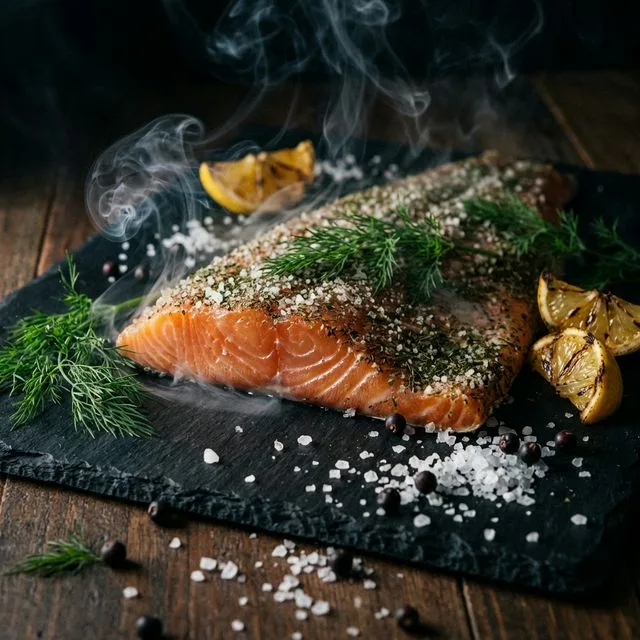
Smoked and cured fish are fundamental to Nordic cuisine. Gravlax, smoked salmon, pickled herring - these aren't restaurant-only foods. Home cooks have been preserving fish this way for centuries, and you can too.
The techniques aren't as complicated as they seem. With basic equipment and attention to food safety, you can create restaurant-quality cured and smoked fish at home.
Understanding the Basics
Curing uses salt (and usually sugar and spices) to draw moisture out of fish and create an environment where bacteria can't thrive. Gravlax is the classic example - raw salmon cured in salt, sugar, and dill.
Smoking adds smoke flavor and further preserves the fish. There are two main types:
Cold smoking happens at temperatures below 30°C (85°F). The fish is cured first, then exposed to smoke without cooking. This creates silky, delicate smoked salmon. It requires more equipment and careful temperature control.
Hot smoking cooks the fish while smoking it, typically at 70-80°C (160-175°F). The result is flaky, fully cooked smoked fish. This is easier and safer for beginners.
Food Safety First
Curing and smoking fish is safe when done properly, but you must follow basic safety rules.
Use fresh, high-quality fish. If you're curing raw fish (like gravlax), use sushi-grade fish or freeze it first at -20°C (-4°F) for at least 24 hours to kill parasites.
Keep everything cold. Cure fish in the refrigerator, not at room temperature. Bacteria grow rapidly in the "danger zone" between 4-60°C (40-140°F).
Use enough salt. Salt is what makes curing safe. Don't reduce salt in curing recipes - it's not just for flavor, it's for safety.
Follow timing guidelines. Under-cured fish can be unsafe. Over-cured fish is just too salty. Stick to recipe times, especially when starting out.
Store properly. Cured and smoked fish should be refrigerated and eaten within the recommended time frame.
Gravlax: The Perfect Starting Point
Gravlax is cured salmon, and it's the ideal first project. No special equipment needed, minimal risk, and spectacular results.
Basic gravlax recipe:
- 500g (1 lb) fresh salmon fillet, skin on, bones removed
- 2 tablespoons salt
- 2 tablespoons sugar
- 1 tablespoon crushed black pepper
- Large bunch of fresh dill
Mix salt, sugar, and pepper. Place half the dill in a dish, put the salmon on top skin-side down, cover with the remaining dill and the salt mixture. Wrap tightly in plastic wrap, place a weight on top, and refrigerate for 24-48 hours, flipping once halfway through.
The salmon will firm up and develop a translucent appearance. Scrape off the cure, slice thinly, and serve with mustard sauce.
That's it. You've made gravlax.
Hot Smoking: Accessible and Delicious
Hot smoking is more forgiving than cold smoking and produces excellent results with minimal equipment.
Equipment options:
- Dedicated smoker (electric, charcoal, or gas)
- Kettle grill with a smoking setup
- Stovetop smoker (for small batches)
- Even a wok with wood chips and a rack (improvised but functional)
Basic process:
-
Brine the fish: Dissolve 60g (1/4 cup) salt and 60g (1/4 cup) sugar in 1 liter (4 cups) water. Submerge fish for 30 minutes to 2 hours depending on thickness. This seasons the fish and helps it stay moist.
-
Dry the fish: Rinse off the brine and pat completely dry. Let it air-dry in the refrigerator for a few hours or overnight. This forms a pellicle - a slightly tacky surface that helps smoke adhere.
-
Smoke: Set up your smoker for 70-80°C (160-175°F). Use wood chips or chunks - alder and apple are traditional for fish. Smoke until the fish reaches an internal temperature of 63°C (145°F), usually 1-3 hours depending on thickness.
The fish should be opaque, flake easily, and have a beautiful golden color.
Wood Choice
Different woods create different flavors.
Alder is traditional in Scandinavia for fish. It's mild and slightly sweet, perfect for delicate fish flavors.
Apple and cherry are also mild and fruity. They work beautifully with salmon and trout.
Beech is common in Europe, mild and versatile.
Avoid strong woods like mesquite or hickory for fish - they overpower the delicate flavor. Also avoid resinous woods like pine or cedar (except for planking, which is different).
Brine Variations
The basic salt-sugar brine can be customized:
Nordic-style: Add dill, juniper berries, and white pepper Citrus: Add lemon or orange zest and bay leaves Spicy: Add chili flakes and garlic Sweet: Increase sugar and add maple syrup or honey
The salt ratio should stay consistent for safety, but you can adjust sugar and add flavorings freely.
Cold Smoking (Advanced)
Cold smoking creates that silky, translucent smoked salmon you see in stores. It's more complex because you need to generate smoke without heat.
The fish must be cured first (like gravlax) to make it safe, since cold smoking doesn't cook it. Then it's exposed to cool smoke for 12-24 hours.
This requires specialized equipment - a cold smoke generator or a smoker with the heat source far from the smoking chamber. It's not recommended for beginners, but it's the next step once you're comfortable with hot smoking.
Common Mistakes
Fish too salty: Too much salt in the cure or brine, or cured too long. Follow recipes carefully and don't extend curing times.
Dry, tough fish: Overcooked or not brined. Use a thermometer and don't exceed target temperature. Brining helps fish stay moist.
Weak smoke flavor: Not enough smoke time, wood too wet or too dry, or temperature too high (smoke flavor develops better at lower temperatures). Ensure good smoke production throughout the process.
White albumin on surface: That white protein that oozes out happens when fish is cooked too quickly. Lower your temperature and cook more slowly.
Fish falls apart: Too hot, cooked too long, or fish was too delicate. Use firmer fish like salmon or trout for smoking. Handle gently.
Storage
Gravlax keeps refrigerated for about 5 days. Slice as needed and keep the rest wrapped tightly.
Hot-smoked fish keeps refrigerated for about a week. It also freezes well - wrap tightly and freeze for up to 3 months.
Cold-smoked fish is more delicate and should be eaten within 3-4 days or frozen.
Always trust your senses. If it smells off or looks questionable, don't eat it.
Beyond Salmon
While salmon is most common, many fish smoke and cure beautifully:
Mackerel: Oily and rich, perfect for hot smoking Trout: Delicate and sweet, excellent hot or cold smoked Herring: Traditional for pickling and smoking Whitefish: Mild flavor takes on smoke beautifully
Each fish has slightly different timing and temperature needs, but the basic techniques remain the same.
Getting Started
Start with gravlax. It requires no special equipment, teaches you about curing, and produces impressive results. Once you're comfortable with that, try hot smoking with whatever equipment you have available.
Don't be intimidated by the process. Humans have been preserving fish this way for thousands of years, long before thermometers and fancy smokers. The techniques are forgiving if you follow basic safety rules and pay attention to what you're doing.
Curing and smoking fish connects you to Nordic food traditions in a direct, hands-on way. The first time you slice into gravlax you made yourself or taste salmon you smoked in your backyard, you'll understand why these techniques have endured for centuries.
Keywords: fish smoking, fish curing, gravlax, smoked salmon, Nordic preservation, home smoking, food preservation, smoking techniques
Meta Description: Learn to smoke and cure fish at home with this beginner's guide. Covers equipment, brine recipes, food safety, gravlax technique, and hot smoking basics for restaurant-quality results.