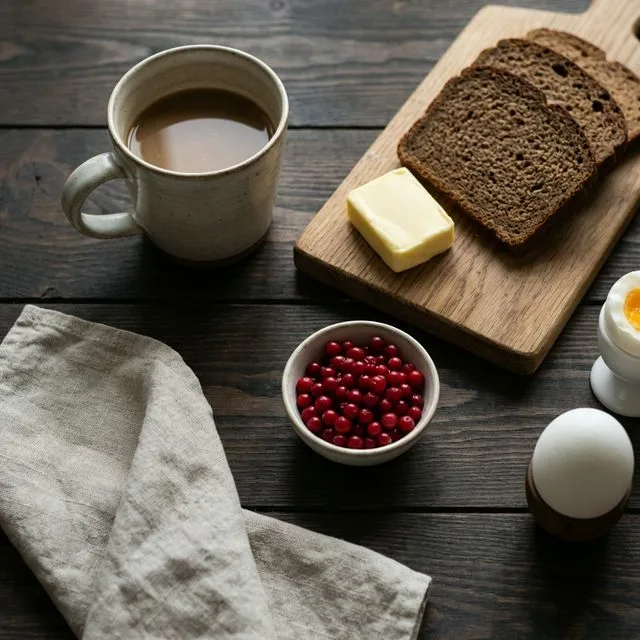
If you've spent any time around Swedish culture, you've probably heard the word "lagom." It's one of those concepts that doesn't translate perfectly into English, but once you understand it, you see it everywhere. The closest translation? "Just right" or "not too much, not too little."
And nowhere is lagom more relevant than in the kitchen.
What Lagom Really Means
Lagom isn't about perfection. It's not about measuring everything down to the gram or following recipes like they're sacred texts. Instead, it's about finding the sweet spot - enough food without waste, enough flavor without overwhelming your palate, enough effort without burning yourself out.
Think of it as the Goldilocks principle, but applied to your entire cooking life.
In Sweden, lagom shows up in how people shop, cook, and eat. You'll rarely see massive portion sizes or overflowing plates. Instead, meals are thoughtfully portioned, ingredients are used efficiently, and nothing goes to waste. It's practical, sustainable, and honestly quite freeing once you get the hang of it.
Lagom Portions: Cooking the Right Amount
One of the biggest challenges in any kitchen is cooking the right amount of food. Too little and someone goes hungry. Too much and you're eating the same leftovers for a week (or worse, throwing food away).
The lagom approach starts with realistic assessment. How many people are you actually feeding? What else are you serving? Will there be bread, salad, or sides? These simple questions help you avoid the common trap of cooking enough to feed an army when you're just making dinner for four.
Here's a practical example: if you're making a stew, start with about 150-200 grams of protein per person. That's enough to satisfy without leaving massive amounts of leftovers. Add vegetables in roughly equal volume to your protein, and you've got a balanced meal that won't leave you with containers taking up your entire fridge.
The beauty of lagom is that planned leftovers are fine. Making extra soup for tomorrow's lunch? Great. But cooking three times what you need "just in case"? That's not lagom.
Using Ingredients Efficiently
Lagom extends to how you use ingredients. In Nordic cooking, there's a deep respect for ingredients and a tradition of using everything you buy.
When you bring home a bunch of parsley, don't just use the leaves and toss the stems. The stems have plenty of flavor and can go into stocks, soups, or blended sauces. That slightly wrinkled bell pepper in your crisper? It's perfect for a stew or soup. Those extra egg yolks from making meringue? Save them for custard or pasta dough.
This isn't about being miserly or making sacrifices. It's about recognizing that good ingredients deserve to be used, not wasted. Plus, it saves money and reduces the mental load of meal planning when you're working with what you have instead of constantly buying new things.
A simple lagom rule: before you go shopping, look at what's already in your fridge and pantry. Build your meals around those ingredients first, then supplement with fresh items as needed.
Balancing Effort and Enjoyment
Here's where lagom really shines: knowing when elaborate cooking is worth it and when simple is better.
Some nights call for a slow-cooked roast with all the trimmings. Other nights, scrambled eggs on toast is exactly right. Lagom means not feeling guilty about either choice. It means understanding that cooking should enhance your life, not drain it.
This is especially important during busy weekdays. A lagom approach might mean:
- Keeping a few reliable 20-minute meals in your rotation
- Doing some prep work on weekends (washing greens, chopping vegetables) without going overboard
- Accepting that pasta with good olive oil and parmesan can be a perfectly satisfying dinner
- Saving the ambitious recipes for when you actually have time to enjoy the process
The goal is sustainable cooking habits, not exhaustion or takeout every night because you set the bar too high.
Seasoning: The Lagom Sweet Spot
Scandinavian food often gets accused of being bland, but that's a misunderstanding of the lagom principle. Nordic cooking tends to highlight the natural flavors of ingredients rather than burying them under heavy seasoning.
Finding lagom in seasoning means tasting as you go and adding gradually. Start with less salt than you think you need, then adjust. This gives you control and prevents the all-too-common problem of oversalting a dish with no way to fix it.
The same goes for spices and herbs. You want enough to enhance the dish, not so much that you can't taste what you're actually cooking. If you're making a fish soup, you should still taste the fish. If you're roasting root vegetables, their natural sweetness should come through.
Bringing Lagom to Your Kitchen
Start small. You don't need to overhaul your entire cooking style overnight. Pick one area where you tend to go overboard and experiment with pulling back.
Maybe that's buying groceries (do you really need three kinds of lettuce?). Maybe it's portion sizes (could you serve 20% less and still be satisfied?). Maybe it's recipe complexity (does this Tuesday night dinner really need twelve ingredients?).
The beautiful thing about lagom is that it meets you where you are. It's not a rigid rule system. It's a gentle reminder to find balance, reduce waste, and make cooking more enjoyable rather than stressful.
And if you accidentally make too much? Well, that's what neighbors and lunch containers are for. Even lagom has room for the occasional miscalculation.
Keywords: lagom, Nordic cooking, Swedish cooking philosophy, sustainable cooking, mindful cooking
Meta Description: Learn how the Swedish concept of lagom (just right) can transform your cooking with better portions, less waste, and more enjoyment in the kitchen.