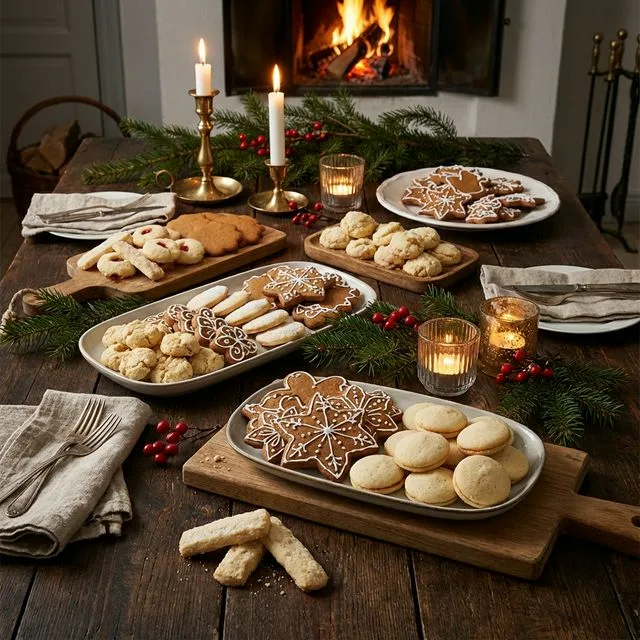
In Scandinavia, Christmas baking isn't a casual afternoon project. It's a marathon. Families spend days baking multiple types of cookies, creating enough to last through the entire Christmas season and fill the traditional seven-cookie plate.
This tradition of abundant Christmas baking reflects Nordic values: preparation, hospitality, and making special occasions truly special. When guests arrive during Christmas, you offer coffee and a selection of homemade cookies. The variety and quality matter.
The Seven-Cookie Tradition
The traditional goal is to have seven different types of Christmas cookies. This isn't a strict rule, but it's a common target. Seven varieties show effort and hospitality. Some families make more, some make fewer, but seven is the classic number.
The cookies should offer variety: some spiced, some buttery, some chocolate, some with nuts. Different textures and flavors so there's something for everyone.
Essential Nordic Christmas Cookies
Pepparkakor (Gingerbread Cookies): Thin, crispy, and heavily spiced with ginger, cinnamon, and cloves. These are non-negotiable. Every Nordic household makes pepparkakor. Roll them thin, cut into shapes (hearts, stars, pigs), and bake until crisp.
Saffransbullar (Saffron Buns): Golden, slightly sweet buns flavored with saffron and shaped into S-curves or other traditional forms. These are for St. Lucia Day (December 13) but remain popular through Christmas.
Vaniljkakor (Vanilla Cookies): Simple butter cookies, often shaped into crescents or rings. Delicate, buttery, and dusted with powdered sugar.
Chokladbollar (Chocolate Balls): No-bake treats made from oats, cocoa, butter, and sugar, rolled in coconut or pearl sugar. Technically not cookies, but they always appear on the Christmas plate.
Drömmar (Dreams): Tender, crumbly cookies with a hint of vanilla and sometimes coconut. They literally melt in your mouth.
Havreflarn (Oat Crisps): Thin, lacy cookies made with oats and butter. Delicate and elegant.
Kokosmakroner (Coconut Macaroons): Chewy coconut cookies, sometimes dipped in chocolate. Dense and sweet.
These seven represent a good variety, but many other cookies appear in Nordic Christmas baking: brune kager, jødekager, kransekake, and countless regional specialties.
The Baking Marathon Strategy
Making seven types of cookies is substantial work. The traditional approach is to dedicate a day (or weekend) to Christmas baking.
Plan ahead: Decide which cookies you'll make. Check recipes and make a master shopping list. Buy everything in one trip.
Organize: Set up your kitchen for efficiency. Clear counter space. Get out all equipment. Preheat the oven.
Batch similar tasks: Make all the doughs that need chilling first. While they chill, make no-bake items. Then move to rolling and cutting, then baking.
Use your freezer: Many cookie doughs freeze beautifully. Make doughs weeks ahead, freeze them, then thaw and bake when ready.
Recruit help: Christmas baking is traditionally a social activity. Invite family or friends. Kids love cutting shapes and decorating. Multiple hands make the work faster and more fun.
Make-Ahead Timeline
Weeks before:
- Make and freeze cookie doughs
- Make and freeze baked cookies that freeze well (most do)
- Buy non-perishable ingredients
One week before:
- Bake cookies from frozen dough
- Make fresh cookies that don't freeze as well
- Assemble no-bake items
Few days before:
- Final baking
- Arrange cookies in tins or on plates
- Make any last-minute items
Most Christmas cookies keep well for weeks if stored properly, so early baking is fine.
Storage
Proper storage keeps cookies fresh for weeks.
Airtight containers: Essential. Use tins, plastic containers, or glass jars with tight lids.
Separate types: Don't mix different cookies in the same container. Flavors transfer, and textures can change (crispy cookies become soft, soft cookies become hard).
Layer with parchment: Place parchment paper between layers to prevent sticking.
Cool completely: Never store warm cookies. They'll create condensation and become soggy.
Freezing: Most cookies freeze excellently. Freeze in airtight containers or bags. Thaw at room temperature before serving.
The Social Aspect
Christmas baking is rarely a solo activity in Scandinavia. It's a time for gathering.
Families bake together, passing down recipes and techniques. Friends host baking parties where everyone makes different cookies and trades. Grandmothers teach grandchildren the family recipes.
This social aspect is as important as the cookies themselves. The memories made while baking become part of the Christmas tradition.
Simplifying for Modern Life
The traditional seven-cookie marathon is wonderful but time-consuming. Modern adaptations work too:
Make fewer types: Three or four varieties still create a nice selection.
Use quality store-bought: Supplement homemade cookies with good bakery items. No shame in this.
Spread it out: Instead of one marathon, bake one type per weekend in November and December.
Focus on favorites: Make larger batches of two or three cookies everyone loves rather than small batches of seven types.
The goal is enjoyment, not stress. If the marathon feels overwhelming, scale it down.
Beyond Cookies
Christmas baking includes more than cookies. Saffron buns, gingerbread houses, and various cakes also appear. Some families make traditional breads or pastries.
The cookie plate is central, but it's part of a larger baking tradition that fills homes with wonderful smells and creates abundance for the season.
For Non-Nordic Bakers
You don't need to be Scandinavian to enjoy this tradition. The recipes aren't complicated. The ingredients are accessible. The process is straightforward.
Start small. Make pepparkakor and one or two other types. Experience the satisfaction of creating variety. Next year, add another type.
The tradition adapts to any kitchen, any skill level, any culture. The core idea - taking time to bake special treats for a special season - translates universally.
Why It Matters
Christmas baking marathons create more than cookies. They create:
Anticipation: The smell of baking signals Christmas is coming.
Abundance: Full cookie tins represent generosity and preparation.
Tradition: Recipes passed down connect generations.
Hospitality: Homemade cookies welcome guests warmly.
Memories: The process itself becomes as important as the result.
When you bite into a homemade pepparkaka in late December, you're tasting more than ginger and spice. You're tasting tradition, effort, and care. That's what makes Nordic Christmas baking special - not just the cookies, but what they represent.
So gather your recipes, clear your schedule, and start baking. Whether you make seven types or three, whether you bake alone or with family, you're participating in a tradition that makes Christmas feel like Christmas.
Keywords: Nordic Christmas cookies, Christmas baking, pepparkakor, saffron buns, Scandinavian Christmas, holiday baking, traditional cookies, Christmas traditions
Meta Description: Complete guide to Nordic Christmas cookie baking. Learn traditional recipes, the seven-cookie tradition, marathon baking strategies, and make-ahead tips for a festive season.