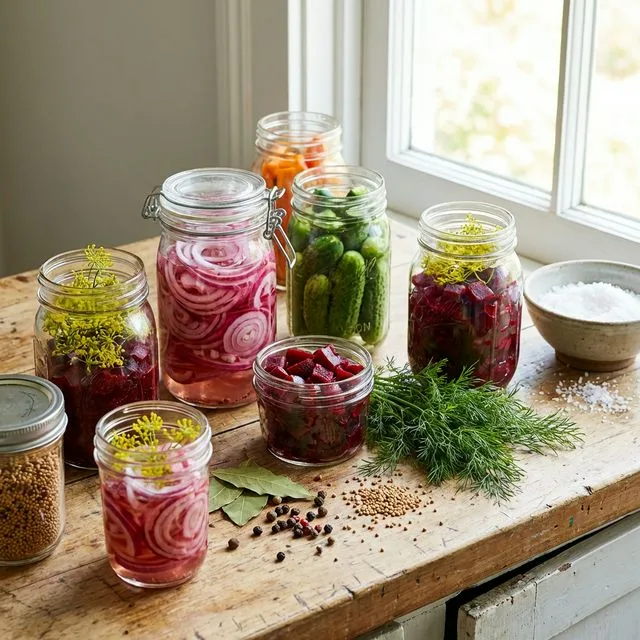
Pickles appear at nearly every Nordic meal. Pickled cucumber with meatballs. Pickled beets with herring. Pickled onions with smørrebrød. These aren't afterthoughts - they're essential components that balance rich, heavy foods with sharp, acidic brightness.
Nordic pickling isn't complicated, but understanding the basics helps you create better pickles and avoid common problems. Whether you want quick refrigerator pickles or traditional fermented versions, the principles are straightforward once you know them.
Quick Pickles vs. Fermented Pickles
These are fundamentally different processes that produce different results.
Quick pickles (inlagd) use vinegar for acidity. You make a brine with vinegar, water, sugar, and salt, pour it over vegetables, and they're ready to eat within hours or days. They're stored in the refrigerator and last for weeks or months. Most modern Nordic pickles are this type because they're fast, reliable, and safe.
Fermented pickles (syltad or jäst) rely on lactic acid bacteria to create acidity naturally. You make a salt brine (no vinegar), submerge vegetables, and wait for fermentation to happen. This takes days to weeks. The flavor is more complex, slightly funky, and the pickles contain beneficial probiotics. Traditional Nordic pickles were often fermented because vinegar was expensive or unavailable.
Both have their place. Quick pickles are convenient and have a clean, sharp flavor. Fermented pickles are more interesting and traditional but require more time and attention.
Quick Pickle Basics
The standard Nordic quick pickle brine has four components: vinegar, water, sugar, and salt.
Vinegar: White vinegar (ättika) is most common because it's neutral and doesn't color the vegetables. Apple cider vinegar works too and adds subtle flavor. Use vinegar with at least 5% acidity.
Water: Dilutes the vinegar so it's not too harsh. The ratio of vinegar to water varies by recipe, but 1:1 is a good starting point.
Sugar: Balances the acidity. Nordic pickles tend to be sweet-sour rather than purely sour. The amount varies widely - some recipes use equal parts sugar and vinegar, others use much less.
Salt: Enhances flavor and helps preserve. Use non-iodized salt (iodine can cause discoloration and off flavors).
A basic ratio to remember: 1 part vinegar, 1 part water, 1/2 to 1 part sugar, and salt to taste (usually 1-2 tablespoons per liter of liquid).
Heat the brine until the sugar and salt dissolve, then pour it over your vegetables. You can pour it hot for softer pickles or let it cool for crunchier results.
Fermented Pickle Basics
Fermented pickles use salt brine instead of vinegar. The salt creates an environment where beneficial lactic acid bacteria thrive while harmful bacteria can't survive.
The key is getting the salt concentration right. Too little salt and bad bacteria can grow. Too much and fermentation won't happen.
A 2-3% salt brine works for most vegetables. This means 20-30 grams of salt per liter of water. Weigh your salt for accuracy - volume measurements can vary.
Submerge your vegetables completely in the brine. Anything exposed to air can develop mold. Use a weight or a smaller jar to keep everything under the liquid.
Ferment at room temperature (18-22°C / 65-72°F). Warmer temperatures ferment faster but can create mushy pickles. Cooler temperatures take longer but produce better texture.
Fermentation time varies from 3 days to several weeks depending on temperature and personal preference. Taste them regularly. When they reach a flavor you like, move them to the refrigerator to slow fermentation.
Classic Nordic Pickles
Inlagd gurka (pickled cucumber) is the most common. Thinly sliced cucumbers in a sweet-sour brine with dill. Ready to eat in a few hours, best after a day. Essential with meatballs.
Rödbetor (pickled beets) are sweet, earthy, and beautiful. Boil beets until tender, peel, slice, and cover with spiced vinegar brine. They turn everything pink but taste amazing.
Inlagd rödlök (pickled red onion) adds sharp, sweet crunch to sandwiches and salads. Slice onions thin, pour hot brine over them, and they're ready in an hour.
Surkål (sauerkraut) is fermented cabbage. Traditional throughout Scandinavia, especially in winter when fresh vegetables were scarce. Just cabbage and salt, fermented for weeks.
Sill (pickled herring) is technically pickling fish, not vegetables, but it's fundamental to Nordic food culture. The fish is cured in salt, then pickled in various flavored brines.
Spices and Flavorings
Nordic pickles often include:
Dill: Fresh or dried, it's the most common pickling herb. Essential for cucumber pickles.
Mustard seeds: Add pungent, slightly spicy flavor. Yellow mustard seeds are traditional.
Peppercorns: Black or white, they add gentle heat.
Bay leaves: Subtle herbal background flavor.
Allspice: Common in beet pickles, adds warmth.
Horseradish: Fresh horseradish root adds sharp, spicy kick.
Onion: Sliced onion in the brine adds flavor and looks nice.
Don't overdo spices. Nordic pickles tend to be relatively simple, letting the vegetable flavor shine through.
Troubleshooting
Pickles too sour: Too much vinegar or too little sugar. Adjust your brine ratio next time. You can sometimes rescue them by draining and adding a sweeter brine.
Pickles too sweet: Opposite problem - too much sugar. Add more vinegar or reduce sugar next time.
Soft, mushy pickles: Usually from pouring boiling brine over delicate vegetables. Let the brine cool first, or use firmer vegetables. For fermented pickles, too-warm fermentation or too-long fermentation causes mushiness.
Cloudy brine: Normal for fermented pickles - that's the bacteria doing their job. For quick pickles, cloudiness might indicate spoilage if it develops after several weeks. When in doubt, throw it out.
Mold on fermented pickles: Small amounts of white surface mold can be skimmed off and the pickles are fine. If there's extensive mold, colored mold, or off smells, discard everything.
Pickles taste off: Trust your senses. If they smell bad or taste wrong, don't eat them. Quick pickles stored properly in the refrigerator rarely spoil, but fermented pickles can go wrong if conditions aren't right.
Storage
Quick pickles live in the refrigerator. They'll keep for weeks or months. The vegetables will gradually soften over time but remain safe to eat as long as they smell and taste fine.
Fermented pickles can be stored at room temperature while actively fermenting, but move them to the refrigerator once they reach desired flavor. Cold storage dramatically slows fermentation. They'll keep for many months refrigerated.
Use clean utensils when removing pickles from the jar. Don't double-dip or introduce contamination.
Getting Started
Start with quick pickled cucumbers. They're foolproof, fast, and delicious. Once you're comfortable with the basic technique, try beets or onions.
When you're ready for fermentation, start with sauerkraut. It's very forgiving and teaches you what successful fermentation looks, smells, and tastes like.
Pickling connects you to Nordic food preservation traditions that go back centuries. Before refrigeration, pickling was essential for winter survival. Now it's about flavor, texture, and balance - adding brightness to rich foods and variety to simple meals.
Keywords: Nordic pickling, food preservation, fermented pickles, quick pickles, Scandinavian preservation, pickling techniques, inlagd gurka
Meta Description: Master Nordic pickling techniques with this complete guide. Learn quick pickles vs fermented pickles, brine ratios, timing, troubleshooting, and classic Scandinavian pickle recipes.