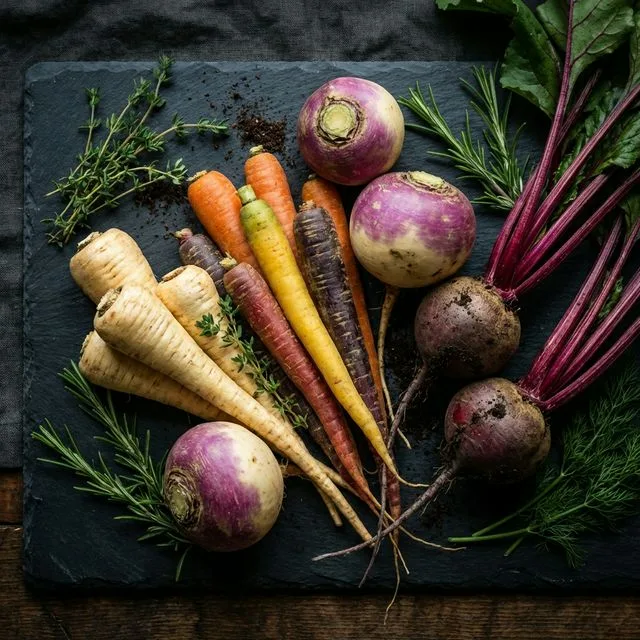
When summer ends in Scandinavia, fresh produce becomes scarce. No more tomatoes, no peppers, no summer squash. But Nordic cooks don't despair. They turn to what grows well in cool climates and stores beautifully through long winters: root vegetables.
These humble vegetables might not seem exciting compared to colorful summer produce, but they're the backbone of Nordic cooking. Learn to work with them properly, and you'll understand why they've sustained generations through harsh winters.
Potatoes: The Foundation
Let's start with the obvious one. Potatoes dominate Nordic cooking in a way that's hard to overstate. New potatoes in summer are a celebration, but storage potatoes carry you through winter.
Not all potatoes are the same. Waxy varieties like Yukon Gold hold their shape when boiled, making them perfect for potato salad or dishes where you want distinct potato pieces. Starchy varieties like Russets break down more, ideal for mashing or for soups where you want them to thicken the liquid.
Selection: Choose firm potatoes without green spots or sprouts. Green indicates solanine, a toxic compound that develops when potatoes are exposed to light.
Storage: Keep potatoes in a cool, dark place with good air circulation. Never refrigerate them - the cold converts starches to sugars, affecting both taste and cooking properties. A basement or cool pantry is ideal. Properly stored, potatoes last months.
Cooking tips: Don't peel potatoes far in advance. Once peeled, they oxidize and turn gray. If you must prep ahead, keep them submerged in cold water. Save potato cooking water for bread baking - the starch improves texture.
Turnips: Underrated and Versatile
Turnips get a bad reputation, probably because most people have only eaten old, tough ones. Fresh turnips, especially small to medium ones, are sweet and mild.
White turnips are most common, but you might also find purple-topped varieties or golden turnips. All are good. Hakurei turnips (small, white Japanese turnips) are exceptionally sweet and can even be eaten raw.
Selection: Choose smaller turnips. Large ones tend to be woody and bitter. The turnip should feel heavy for its size, and the skin should be smooth and unblemished.
Storage: Remove the greens immediately - they draw moisture from the root. Store turnips in the crisper drawer of your fridge, where they'll keep for several weeks. Don't wash them until you're ready to use them.
Cooking tips: Young turnips don't need peeling - just scrub them well. Older turnips have tougher skin that's better removed. Roast them with a bit of honey to bring out their natural sweetness. Add them to stews in the last 30 minutes of cooking - they become meltingly tender without turning to mush.
Parsnips: Winter's Sweet Secret
Parsnips look like white carrots but taste nothing like them. They're sweet, earthy, and develop incredible flavor when roasted. Frost actually improves parsnips - it converts starches to sugars, making them even sweeter.
Selection: Look for medium-sized parsnips. Very large ones often have woody cores. The parsnip should be firm and relatively smooth.
Storage: Keep parsnips in the crisper drawer. They store well for weeks, and unlike many vegetables, they often taste better after a bit of storage as starches continue converting to sugars.
Cooking tips: Always peel parsnips - the skin is tough. If you have a very large parsnip, cut it lengthwise and remove the woody core. Parsnips are incredible roasted - their natural sugars caramelize beautifully. They also make excellent soup, either on their own or combined with apples and curry powder for something more interesting.
Celeriac: The Ugly Delicious
Celeriac (celery root) wins no beauty contests. It's knobby, hairy, and frankly weird-looking. But inside that ugly exterior is creamy, celery-flavored flesh that's absolutely worth the effort of peeling.
Selection: Choose smaller, firmer celeriacs. Very large ones can be hollow in the center. The celeriac should feel heavy and solid.
Storage: Celeriac stores exceptionally well. Keep it in the crisper drawer for weeks, even months.
Cooking tips: Peeling celeriac is annoying - use a sharp knife and accept that you'll waste some flesh getting through that knobby skin. Celeriac turns brown quickly once cut, so work fast or use acidulated water (water with lemon juice). Celeriac mash is lighter than potato mash but just as satisfying. Raw celeriac makes excellent remoulade. It's also fantastic in soups and stews, adding depth without overwhelming other flavors.
Rutabaga: The Nordic Staple
In Sweden, rutabaga (kålrot) is as essential as potatoes. Americans often don't know what to do with this yellow-fleshed root, but Nordic cooks use it constantly.
Rutabagas are often waxed for longer storage. This protective coating is food-safe but needs to be removed before cooking.
Selection: Choose rutabagas that feel heavy and firm. Avoid any with soft spots or extensive scarring.
Storage: Thanks to that wax coating, rutabagas store for months in a cool place. Once cut, wrap tightl y and refrigerate.
Cooking tips: You must peel rutabagas, including removing the wax coating. The peel is thick, so use a sharp knife or a very sturdy peeler. Rutabagas take longer to cook than most root vegetables - plan accordingly. They're excellent mashed, either alone or mixed with carrots or potatoes. Roasted rutabaga cubes develop a sweet, nutty flavor. In Sweden, rutabaga mash is traditional with many meat dishes.
Carrot's Special Mention
While carrots are available year-round in stores, they deserve mention as a root vegetable that Nordic cooks rely on heavily. Storage carrots (as opposed to baby carrots or summer carrots) are sweeter and more robust.
Choose firm carrots without cracks. Store them in the crisper drawer for weeks. Don't store carrots near apples - apples release ethylene gas that makes carrots bitter.
Cooking Root Vegetables Together
Root vegetables roast beautifully together, but they have different cooking times. Cut denser vegetables (like rutabaga) smaller or start them earlier. Toss everything with oil, salt, and herbs, and roast at 400°F (200°C) until caramelized and tender.
For soups and stews, add root vegetables in order of cooking time: rutabaga and celeriac first, then carrots and parsnips, turnips and potatoes last.
Why Root Vegetables Matter
Beyond their practical storage properties, root vegetables offer genuine nutrition and comfort. They're filling, affordable, and incredibly versatile. In a world of expensive, out-of-season produce shipped from far away, root vegetables are local, sustainable, and often taste better than anything from thousands of miles away.
Learning to cook root vegetables well connects you to centuries of Nordic cooking tradition. These are the vegetables that sustained people through long, dark winters. Treat them with respect, and they'll reward you with honest, satisfying meals.
Start with what you know - probably potatoes and carrots. Add one new root vegetable this week. Maybe roast some parsnips or try celeriac mash. Before long, you'll find yourself reaching for these earthy, sweet, humble vegetables all winter long.
Keywords: root vegetables, Nordic vegetables, winter ingredients, seasonal cooking, Nordic kitchen, vegetable guide, potato storage
Meta Description: Complete guide to Nordic root vegetables: potatoes, turnips, parsnips, celeriac, and rutabaga. Learn to select, store, and cook these winter essentials for maximum flavor.