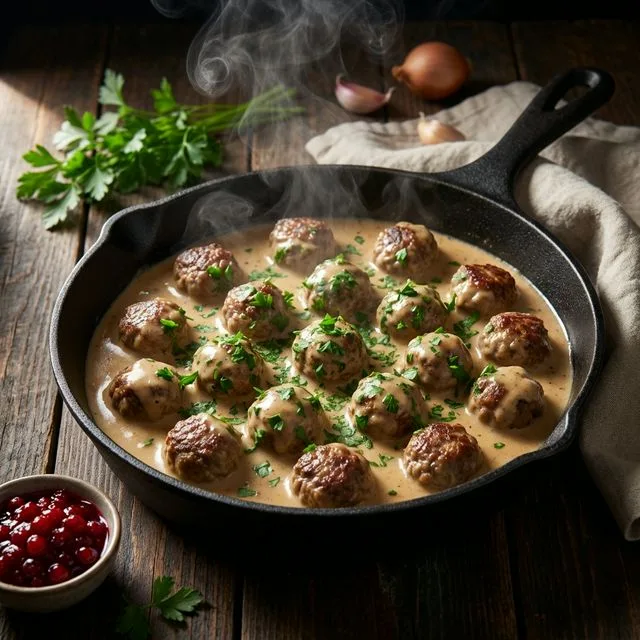
Swedish meatballs might be the most famous Nordic dish worldwide, but most people have only eaten mediocre versions. The frozen kind, or restaurant versions that are dense and dry. Real Swedish meatballs are tender, almost creamy inside, with a delicate texture that melts in your mouth.
The difference isn't exotic ingredients or complicated methods. It's technique. Small details in how you mix, shape, and cook the meatballs transform them from ordinary to extraordinary.
The Meat Mixture
Traditional Swedish meatballs use a combination of beef and pork. The beef provides flavor, the pork adds fat and tenderness. A 50/50 mix works well, though some prefer 60% beef to 40% pork for a bit more beefy flavor.
Don't use lean meat. You need fat for flavor and moisture. Ground beef with 15-20% fat and regular ground pork (not lean) give the best results. If your meatballs turn out dry, it's often because the meat was too lean.
Some recipes add veal to the mix for extra tenderness. This is traditional but not essential. If you can find it and want to splurge, use equal parts beef, pork, and veal.
The Panade: Secret to Tenderness
The key to tender meatballs is the panade - a mixture of bread and liquid that gets mixed into the meat. This isn't filler, it's essential for texture.
Use fresh breadcrumbs or torn white bread, not dried breadcrumbs. Soak the bread in milk or cream until it's completely saturated and soft. Squeeze out excess liquid, but the bread should still be quite wet.
The panade serves multiple purposes. It keeps the meatballs moist during cooking. It makes the texture lighter and more tender. And it helps the meatballs hold together without becoming dense.
For about 500g (1 lb) of meat, use roughly 50-75g of bread (about 2 slices) soaked in 100ml (1/2 cup) of milk or cream. The exact ratio isn't critical, but don't skip this step.
Mixing Technique
This is where many people go wrong. How you mix the meat determines the final texture.
First, mix everything except the meat. Combine the soaked bread, finely chopped onion (sautéed until soft and cooled), egg, salt, pepper, and spices (typically allspice and sometimes white pepper or nutmeg). Mix this thoroughly.
Then add the meat and mix just until combined. Don't overmix. Overworking the meat develops the proteins too much, creating a dense, tough texture. Mix with your hands or a wooden spoon just until everything is evenly distributed.
Some cooks chill the mixture for 30 minutes before shaping. This makes it easier to handle and helps the flavors meld.
Shaping the Meatballs
Swedish meatballs are small - about the size of a walnut, roughly 2-3cm (1 inch) in diameter. Larger meatballs don't cook as evenly and lose that delicate texture.
Wet your hands with cold water before shaping. This prevents sticking and helps create smooth, round meatballs. Roll each meatball gently between your palms. Don't compress them too much - you want them firm enough to hold together but not packed tight.
Work quickly. If the mixture gets warm from your hands, it becomes sticky and harder to shape. If this happens, chill it again briefly.
For consistent size, some cooks use a small cookie scoop. This speeds up the process and ensures even cooking since all the meatballs are the same size.
Cooking Temperature and Technique
This is critical. Swedish meatballs are traditionally pan-fried, not baked. The pan-frying creates a light crust while keeping the inside tender.
Use a large skillet with butter (traditional) or a mix of butter and neutral oil (more practical - the oil prevents the butter from burning). Heat the pan over medium heat, not high heat.
The pan should be hot enough that the meatballs sizzle when they hit it, but not so hot that they brown immediately. If the heat is too high, the outside burns before the inside cooks. If it's too low, the meatballs steam instead of frying and won't develop that nice crust.
Don't crowd the pan. Cook in batches if necessary. Crowding lowers the pan temperature and causes steaming instead of frying.
Let the meatballs sit undisturbed for the first minute or two. This allows a crust to form. Then gently roll them to brown all sides. Total cooking time is usually 7-10 minutes for small meatballs.
They're done when they're firm to the touch and no longer pink inside. If you're unsure, cut one open to check. The internal temperature should reach 70°C (160°F).
The Sauce
Swedish meatball sauce is simple but essential. It's a cream sauce made from the pan drippings.
After cooking the meatballs, remove them from the pan. Add a bit of butter if the pan is dry, then whisk in flour to make a roux. Cook for a minute, then gradually add beef stock, whisking constantly to prevent lumps.
Once the stock is incorporated and the sauce has thickened slightly, add cream. The ratio of stock to cream varies by preference - more stock makes a lighter sauce, more cream makes it richer. Season with salt, pepper, and a touch of soy sauce (traditional in Sweden, it adds depth without making the sauce taste Asian).
Some cooks add a spoonful of lingonberry jam to the sauce for a subtle sweetness. This is optional but delicious.
Return the meatballs to the sauce to warm through before serving.
Common Mistakes
Dense, tough meatballs: Usually from overmixing the meat or using meat that's too lean. Mix gently and use meat with adequate fat.
Dry meatballs: Not enough panade, meat too lean, or overcooked. Make sure your bread-to-meat ratio is right and don't overcook.
Meatballs fall apart: Not enough egg or the mixture wasn't mixed enough. One egg per 500g of meat is standard. Make sure the panade and seasonings are well mixed before adding meat.
Burnt outside, raw inside: Heat too high. Lower the temperature and cook more slowly.
No crust, steamed texture: Heat too low or pan too crowded. Increase heat slightly and cook in smaller batches.
Serving
Traditional accompaniments are mashed potatoes, lingonberry jam, and pickled cucumber. The combination of rich meatballs, creamy potatoes, tart lingonberries, and sharp pickles is perfectly balanced.
Some serve them with boiled potatoes instead of mashed. Either works. The key is having something to soak up that delicious cream sauce.
Make Ahead and Storage
Meatballs are excellent make-ahead food. You can shape them and refrigerate for up to 24 hours before cooking, or freeze them uncooked for up to 3 months.
Cooked meatballs also freeze well. Cool them completely, freeze in a single layer on a baking sheet, then transfer to a freezer bag. Reheat gently in sauce.
Leftover meatballs are fantastic. Many Swedes claim they taste even better the next day after the flavors have melded.
Beyond Tradition
Once you master the basic technique, you can experiment. Some cooks add grated cheese to the mixture. Others use different spice combinations. Some make them larger for a heartier meal.
But start with the traditional version. Learn the proper technique, understand how the panade works, master the pan temperature. Then you'll have the foundation to experiment successfully.
Swedish meatballs aren't complicated, but they reward attention to detail. Mix gently, shape carefully, control your heat, and you'll create meatballs that are genuinely special - tender, flavorful, and worth the effort.
Keywords: Swedish meatballs, cooking technique, Nordic recipes, meatball recipe, Swedish cooking, köttbullar, traditional Swedish food
Meta Description: Master authentic Swedish meatballs with this detailed technique guide. Learn mixing methods, shaping tricks, pan temperature secrets, and how to achieve perfect tender texture.