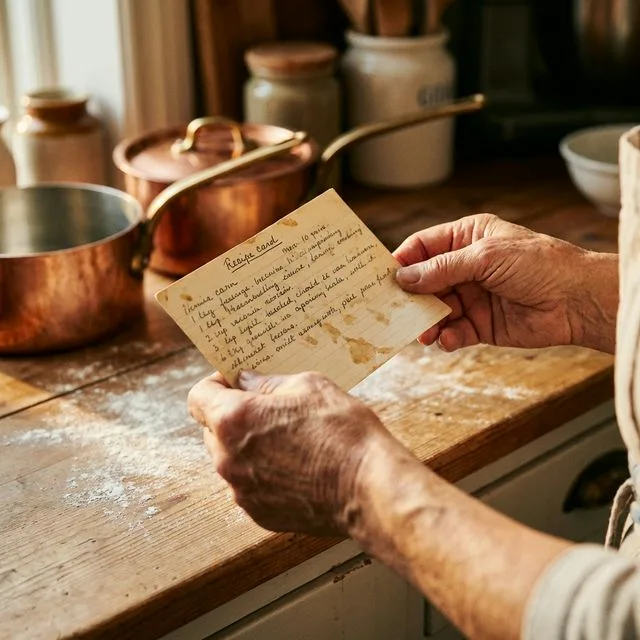
There's something special about your grandmother's recipe cards. Maybe they're written in slightly shaky handwriting on yellowed index cards. Maybe they're scribbled on the back of an old envelope, splattered with decades-old grease stains. Maybe they're tucked into a worn cookbook, corrections and notes squeezed into the margins.
These aren't just recipes. They're family history, cultural heritage, and a direct connection to the people who came before you.
Why Family Recipes Matter
In Nordic countries, food traditions run deep. The way your grandmother made her köttbullar, the exact method your morfar used for gravlax, the secret to your tante's perfect krumkake - these aren't just cooking techniques. They're stories, memories, and links to your family's past.
When a family recipe is lost, it's not just a dish that disappears. It's the memory of Sunday dinners, holiday celebrations, and the specific taste of home. It's your grandmother's hands kneading dough, your grandfather's careful attention to brine ratios, your aunt's laugh as she explained why you absolutely must use real butter.
The problem is that handwritten recipes are fragile. Paper degrades, ink fades, and recipe cards get lost in moves or damaged in kitchen accidents. Without action, these pieces of family history can vanish.
The Digital Solution
Digitizing family recipes isn't about abandoning tradition. It's about protecting it.
When you create a digital copy of a handwritten recipe, you're not replacing the original. You're creating a backup that can survive fires, floods, and the general chaos of life. You're making it possible to share that recipe with cousins across the country or siblings who moved abroad. You're ensuring that your children and grandchildren will have access to these family treasures.
Plus, digital recipes are searchable. Instead of flipping through boxes of cards trying to remember which one had that cardamom cake, you can find it in seconds.
How to Digitize Old Recipes
The process is simpler than you might think, and you don't need fancy equipment.
Start with photos: Use your phone to photograph each recipe card or cookbook page. Make sure the lighting is good and the text is clearly readable. Don't worry about perfect angles - you can adjust these later if needed.
Take multiple shots if necessary, especially for recipes with notes in the margins or annotations on the back. These handwritten additions often contain the most valuable information - the "cook it longer" or "add more sugar" notes that made the recipe actually work.
Type them out: This is the time-consuming part, but it's worth it. As you type, you're not just copying text. You're familiarizing yourself with the recipe, noticing details you might have missed, and sometimes discovering that what you thought was a standard recipe actually has some unique family twist.
Keep the original language and measurements, even if they're old-fashioned. If your grandmother wrote "a coffee cup of flour," keep that phrasing. You can add modern conversions in parentheses, but preserving the original wording maintains authenticity.
Add context: This is where digital recipes truly shine. Along with the recipe itself, add information about its origin. Who created or perfected this recipe? For what occasions was it typically made? Are there any family stories connected to it?
These notes transform a simple recipe into a piece of family history. Your future grandchildren won't just know how to make the cookies - they'll know these were the cookies great-grandma always made for Christmas Eve, and that she learned the recipe from her mother who brought it from Sweden in 1952.
Organizing Your Digital Collection
Once you've digitized your recipes, organization matters. A pile of digital files is barely better than a pile of recipe cards.
Group recipes logically. You might organize by meal type (desserts, mains, sides), by season or holiday (Christmas baking, midsummer dishes), or by family member (Grandma's recipes, Uncle Erik's specialties). Whatever system makes sense for how you actually cook.
Use consistent naming. Something like "Grandma_Maria_Kanelbullar" is much more searchable than "IMG_20240315_153642.jpg".
Consider creating a family recipe collection that you can share with relatives. Even if everyone prefers different organizational systems, having a central archive ensures nothing gets lost. Cloud storage means multiple family members can access the same collection, and if one person's computer dies, the recipes survive.
Keeping Traditions Alive
Digitizing recipes is just the first step. The real preservation happens when you actually make them.
Try cooking one old family recipe each month. It doesn't have to be elaborate. Even simple dishes connect you to your heritage and keep cooking skills alive that might otherwise be forgotten. As you cook, you'll often discover that the written recipe is incomplete - there's some technique or timing that "everyone just knows" but was never written down.
When you find these gaps, document them. Add notes about what temperature the dough should feel, what color the sauce should be, how the batter should pour. These details are what separate a mediocre result from the real thing.
Cook these recipes with your children or younger family members. Let them help, even if it's messy. The memories they'll form of making these dishes with you will be just as valuable as the recipes themselves.
Sharing the Heritage
Some families create printed recipe books as gifts, compiling the digitized recipes into a proper family cookbook. Others simply share the digital files. Either way, spreading these recipes through the family helps ensure they'll survive for another generation.
You might discover that your siblings or cousins have recipes you don't. Pool your collections. That recipe you've been trying to recreate from childhood memory might be sitting in your cousin's recipe box, perfectly preserved.
The Time Is Now
If your grandparents are still alive, ask them about their recipes while you can. The stories behind the dishes are often as valuable as the cooking instructions. Record them talking about how they learned to cook, what meals were typical when they were young, what ingredients were hard to find and what substitutions they used.
These conversations become precious after they're gone.
Even if you're not much of a cook, these recipes are worth preserving. Maybe you'll never make your grandma's lutefisk, but your cousin might. Maybe your children will. The important thing is keeping these family traditions alive and accessible.
Start with one recipe. Just one. Photograph it, type it up, add what you know about its history. Then do another. Before long, you'll have created something valuable - a bridge between past and future, preserving your family's culinary heritage for generations to come.
Keywords: traditional recipes, Nordic heritage, family recipes, recipe preservation, digital cookbook, cultural heritage
Meta Description: Learn how to digitize and preserve handwritten family recipes from Nordic traditions. Protect your culinary heritage and keep family cooking traditions alive for future generations.