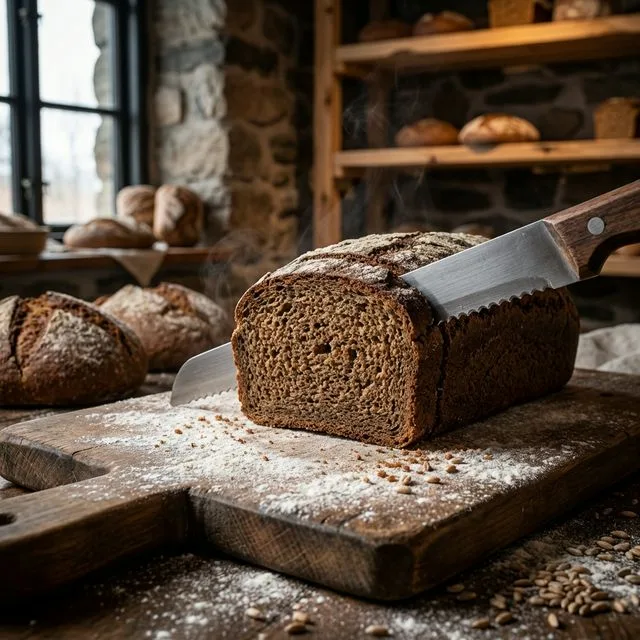
Walk into any Scandinavian home and you'll find rye bread. Dark, dense, and deeply satisfying, it's a staple that appears at breakfast, lunch, and dinner. But baking with rye flour can frustrate newcomers. It doesn't behave like wheat flour. It's sticky, it doesn't rise the same way, and the texture can go wrong easily.
Understanding rye flour transforms it from challenging to rewarding. Once you grasp how it works, you'll be making authentic Nordic breads with confidence.
Why Rye Is Different
Rye contains much less gluten than wheat. Gluten is what gives bread structure and chew. With less gluten, rye dough behaves completely differently. It's stickier, it doesn't develop the same elasticity, and it produces denser breads.
Rye also contains pentosans, complex carbohydrates that absorb huge amounts of water. This is why rye dough feels so wet and sticky compared to wheat dough with the same flour-to-water ratio. Those pentosans are also why rye bread stays moist for days while wheat bread dries out quickly.
The flavor is different too. Rye has an earthy, slightly sour taste that intensifies in darker rye flours. Many Nordic rye breads use sourdough fermentation, which enhances this characteristic tanginess.
Types of Rye Flour
Not all rye flour is the same. The type you choose dramatically affects your final product.
Light rye flour is made from the inner part of the rye grain. It's finer and lighter in color, with a milder flavor. Light rye works well mixed with wheat flour for breads that are still fluffy but have rye character. It's good for beginners because it behaves more like wheat flour.
Medium rye flour (sometimes called whole rye) includes more of the grain, including some bran. It's grayer in color and has more flavor. This is what most recipes mean when they just say "rye flour." It's versatile and authentic for most Nordic breads.
Dark rye flour or pumpernickel flour is made from whole rye grain and sometimes includes crushed rye berries. It's very dark, very flavorful, and produces extremely dense breads. Use it in small amounts mixed with lighter flours, or embrace the density for traditional pumpernickel-style loaves.
Rye meal or cracked rye adds texture. It's partially ground rye that gives bread a hearty, rustic quality. Often added to doughs along with flour for visual and textural interest.
Working with Rye Dough
Rye dough requires different techniques than wheat dough.
Don't expect it to look like wheat dough. Rye dough is stickier and doesn't develop a smooth, elastic texture. If you're waiting for it to "come together" like wheat dough, you'll be disappointed. Embrace the stickiness.
Use plenty of liquid. Because of those water-absorbing pentosans, rye dough needs more water than wheat dough. Many rye bread recipes have hydration levels of 70-80% or even higher. The dough will seem too wet, but it's correct.
Don't overwork it. Since there's less gluten, kneading doesn't help the way it does with wheat. Mix until combined, then leave it alone. Over-mixing just makes the dough gummier.
Let it rest. Rye benefits from long rests. This allows the pentosans to fully hydrate and the flavors to develop. Many recipes call for overnight rises or even multi-day fermentation.
Oil your hands and tools. Fighting sticky rye dough with flour just makes it heavier. Instead, oil your hands, your work surface, and your tools. The dough will be much easier to handle.
Sourdough and Rye
Most traditional Nordic rye breads use sourdough starter. This isn't just for flavor, it's functional. The acidity from sourdough actually helps rye dough structure. It makes the crumb less gummy and the bread easier to slice.
If you don't have sourdough starter, you can make rye bread with commercial yeast, but the texture won't be quite as good. Consider starting a rye sourdough starter. It's more resilient than wheat starter and develops wonderful complex flavors.
Classic Nordic Rye Breads
Rugbrød is a dark, dense Nordic rye bread, packed with whole grains and seeds. It's traditionally made in a loaf pan and sliced thin for open sandwiches. The texture should be moist but sliceable, not crumbly.
Knäckebröd (Swedish crispbread) is the opposite end of the spectrum. Thin, crispy, and dry, it stores for months. Traditionally baked with a hole in the center so it could be stored on poles
. Making knäckebröd requires rolling the dough very thin and baking it until completely dry and crisp.
Limpa is Swedish sweetened rye bread, flavored with molasses, orange peel, and spices. It's softer and lighter than other rye breads, often made with a mix of rye and wheat flour. Excellent for sandwiches or toasted with butter.
Finnish ruisleipä comes in many forms, from dense whole-grain loaves to flat rounds with holes in the middle. Each region has its own variation, but all share that characteristic rye flavor.
Troubleshooting Rye Baking
Too dense and gummy: This usually means not enough fermentation time. Give the dough longer to rise, or use more starter if making sourdough. It can also indicate too much rye flour for the amount of rising agent.
Falls apart when sliced: Not enough structure. Try adding some wheat flour (even 20-30% helps significantly), make sure your starter is active, or let the bread cool completely before slicing. Hot rye bread always crumbles.
Dough too wet to handle: While rye dough is sticky, if it's literally soup, you likely measured wrong or your flour is particularly fine. Add a bit more flour, but understand that rye dough will never be as firm as wheat dough.
Tastes too sour: Long fermentation creates sourness. If it's too much, reduce fermentation time or use less starter. You can also add a pinch of baking soda to neutralize some acidity (traditional in some recipes).
Too dry: Rye bread should be moist inside. If yours is dry, you likely didn't use enough water or you overbaked it. Rye bread can take longer to bake than wheat bread, but watch for doneness rather than just timing. The internal temperature should reach about 200-210°F (95-100°C).
Storing Rye Bread
One of rye's great advantages is its keeping quality. Properly stored, rye bread stays fresh for a week or more.
Wrap cooled bread tightly in plastic or store in a plastic bag. Don't refrigerate it - this makes it stale faster. Room temperature storage works fine for most rye breads.
Rye bread also freezes excellently. Slice it before freezing, then you can pull out individual slices as needed. Toast frozen slices straight from the freezer.
Knäckebröd, once completely dry, stores at room temperature in an airtight container for months. If it absorbs moisture and loses crispness, you can re-crisp it in a low oven.
Beyond Bread
Rye flour isn't just for bread. In Nordic baking, it appears in cookies (especially gingersnaps), certain pancakes, and even some cakes. A small amount of rye flour adds distinctive flavor and keeps baked goods moist longer.
Some bakers add rye flour to pizza dough for extra flavor and a slightly different texture. It works beautifully in crackers and savory biscuits. Experiment with replacing 10-20% of wheat flour in your recipes with rye for interesting results.
Getting Started
If you're new to rye baking, start with a bread that's part wheat, part rye. This gives you some of the rye flavor and texture while still having enough gluten structure to be forgiving. A 60% wheat, 40% rye ratio works well for beginners.
Once comfortable with mixed breads, try a traditional rugbrød or make knäckebröd. Both are very forgiving despite seeming intimidating. Rugbrød is hard to mess up because it's supposed to be dense. Knäckebröd is actually simple - if the first batch isn't crispy enough, just bake it longer next time.
Rye baking connects you to centuries of Nordic food tradition. These breads sustained people through long winters when wheat was scarce or expensive. The techniques have been refined over generations to make the most of this challenging but rewarding grain.
Keywords: rye flour, Nordic bread, rye baking, knäckebröd, rugbrød, sourdough, dark bread, Scandinavian baking
Meta Description: Complete guide to baking with rye flour. Learn about rye types, techniques for working with sticky dough, and how to make authentic Nordic breads and crispbread.