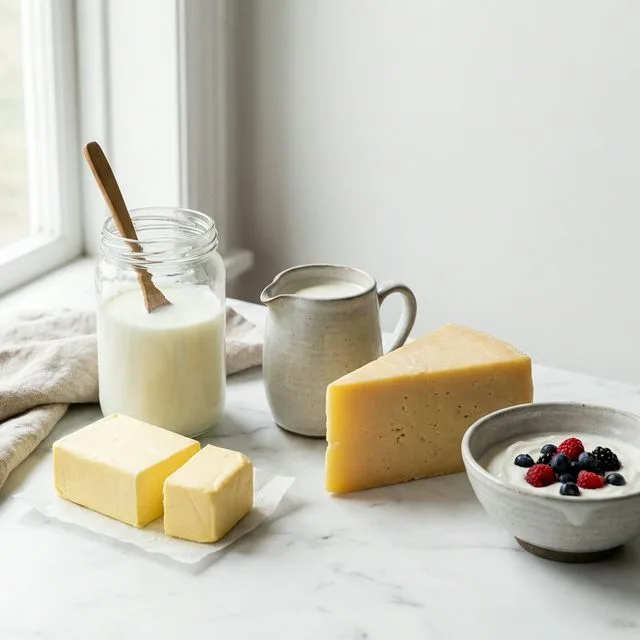
Walk into a Swedish supermarket's dairy aisle and you might feel overwhelmed. Rows of unfamiliar products with names like filmjölk, långfil, kesella, and kvarg. For anyone raised on regular milk and yogurt, it's confusing territory.
But these products aren't exotic or complicated. They're everyday staples in Nordic kitchens, each with specific uses and flavors. Understanding them opens up a whole category of traditional recipes and gives you more options for healthy, delicious cooking.
Filmjölk: The Morning Essential
Filmjölk (literally "fil milk") is probably the most common fermented milk product in Sweden. It looks like drinkable yogurt but tastes less sour and has a thinner consistency. In Norway, a similar product is called kulturmelk.
What it is: Filmjölk is milk fermented with specific bacterial cultures that give it a mild, slightly tangy flavor. It's quite liquid compared to yogurt, somewhere between milk and yogurt in thickness.
How to use it: Scandinavians drink filmjölk for breakfast, often mixed with müesli or cereal. It's also used in baking, particularly in pancakes and quick breads, where its acidity helps activate baking soda. Some people drink it straight as a refreshing beverage.
Substitutes: Buttermilk is the closest substitute, though it's slightly more sour. Thin yogurt (yogurt whisked with a bit of milk) also works. Kefir has a similar texture but a much stronger, more sour flavor.
Långfil: The Ropy One
Långfil is filmjölk's stranger cousin. It has a unique, rope-like, viscous texture that can be off-putting if you're not used to it. When you spoon it, it stretches in long strands.
What it is: Långfil is fermented with bacteria that produce a thickening substance, creating its distinctive stringy texture. The flavor is mild and pleasant, similar to filmjölk.
How to use it: Like filmjölk, långfil is typically eaten at breakfast with cereal or müesli. The texture normalizes once you mix it with other ingredients. Some people love the unique mouthfeel, others find it strange. It's very much an acquired taste.
Substitutes: Regular filmjölk or buttermilk. The taste is similar even if the texture is different.
Kvarg: The Protein Powerhouse
Kvarg (called kvark in Norway) is having a moment internationally. It's a fresh cheese similar to quark, with a thick, creamy texture and mild flavor.
What it is: Kvarg is made by warming soured milk until it curdles, then straining out the whey. What remains is a thick, protein-rich fresh cheese. It's much thicker than yogurt and not as sour.
How to use it: Kvarg works both in sweet and savory applications. Mix it with herbs and garlic for a dip or spread on sandwiches like cream cheese. Sweeten it with honey or jam for a high-protein breakfast or snack. It's excellent in cheesecake-style desserts and as a substitute for sour cream in many recipes.
Substitutes: The closest substitute is quark (if you can find it) or Greek yogurt, though Greek yogurt is more sour. Strained regular yogurt (yogurt cheese) is homemade quark, basically. Cottage cheese run through a blender also approximates the texture.
Kesella: The Thick Cousin
Kesella falls somewhere between regular yogurt and kvarg. It's thicker than yogurt but not quite as thick as kvarg, with a pleasant mild tang.
What it is: Kesella is a cultured milk product, similar to thick yogurt but with a specific bacterial culture that gives it a characteristic mild flavor.
How to use it: Kesella works anywhere you'd use thick yogurt. Top it with berries and granola for breakfast, use it in smoothies, or mix it with herbs as a sauce for vegetables or fish. It's popular in baking, particularly in recipes that benefit from dairy without too much sourness.
Substitutes: Thick yogurt or Greek yogurt. The flavor will be similar, though Greek yogurt tends to be more sour.
Gräddfil: Scandinavian Sour Cream
Gräddfil is the Nordic answer to sour cream. It looks similar but has a milder, less sour flavor.
What it is: Gr äddfil is cultured cream, fermented similarly to sour cream but typically with different cultures, resulting in a gentler tang.
How to use it: Use gräddfil anywhere you'd use sour cream. Dollop it on baked potatoes, mix it into soups for richness, use it as a base for creamy sauces and dips. It's also common in baking, particularly in cakes where it adds moisture and a subtle tang.
Substitutes: Sour cream or crème fraîche. Sour cream is slightly more sour, crème fraîche slightly less and richer. All work fine in most recipes.
Standard Cultured Milk Products
Beyond these specifically Nordic products, Scandinavia also has the dairy products you'd expect:
Yogurt (yoghurt): Regular yogurt is widely available, though the Nordic versions might be less sweet than what you find in American supermarkets.
Skyr: Though originally Icelandic, skyr is now common in Norwegian and Swedish stores. It's technically a cheese but used like very thick yogurt.
Cottage cheese (keso, kesella): Standard cottage cheese is available, though kesella (the cultured milk product) shouldn't be confused with keso (cottage cheese) despite similar names.
Why So Much Fermented Dairy?
Northern climates historically had limited fresh produce for much of the year. Fermented dairy products provided probiotics and nutrients, plus fermentation acted as preservation before refrigeration. These products became deeply embedded in Nordic food culture and remain popular even now when fresh produce is available year-round.
Using What You Have
If you live outside Scandinavia and can't find these specific products, don't stress. Most Nordic recipes work fine with substitutes. The key is understanding the role the dairy plays in each recipe:
- For drinking or pouring on cereal: Use buttermilk or thin yogurt
- For baking: Buttermilk or yogurt thinned with milk works in most recipes
- For thick, protein-rich applications: Greek yogurt or strained yogurt
- For rich, creamy applications: Sour cream or crème fraîche
The exact flavor won't be identical, but the recipe will still work.
Making Your Own
Many of these products can be made at home if you can get the right cultures. Filmjölk cultures are available online, as are cultures for other fermented dairy products. Making your own ensures you always have access and can be surprisingly satisfying.
Kvarg is particularly easy to make at home. Heat milk until it's roughly 85-90°F (30-32°C), add a bit of cultured buttermilk or filmjölk, and let it sit until it thickens. Strain through cheesecloth, and you have homemade kvarg.
The Bottom Line
Scandinavian dairy products aren't mysterious. They're practical, everyday foods that happen to have unfamiliar names. Once you understand what each one is and how it's used, they're no more complicated than regular yogurt or sour cream.
If you're lucky enough to have access to these products, try them. They open up traditional Nordic recipes and offer variety in your dairy options. If you can't find them, use the substitutes. The goal is good food, not perfect authenticity.
Either way, understanding these products deepens your knowledge of Nordic cuisine and gives you more tools for creative, healthy cooking.
Keywords: Scandinavian dairy, Nordic dairy, filmjölk, kvarg, kesella, Nordic ingredients, fermented milk
Meta Description: Guide to Scandinavian dairy products: filmjölk, kvarg, kesella, and more. Learn what they are, how to use them, and what to substitute when you can't find them.