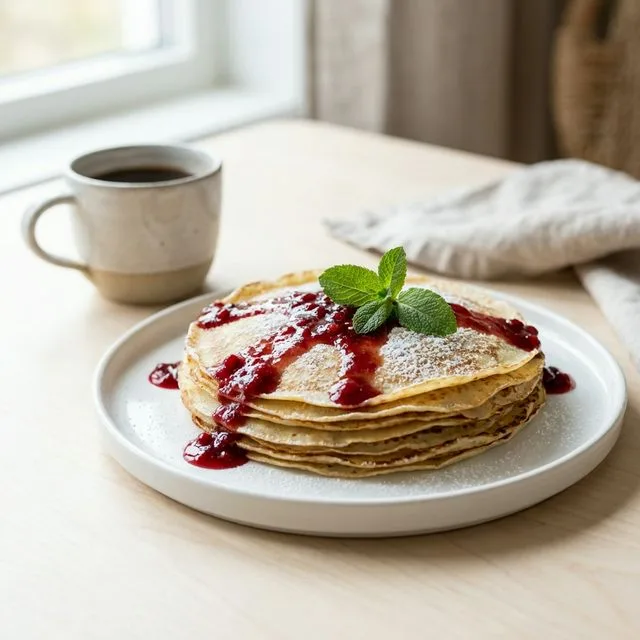
Pancakes appear simple - mix some ingredients, pour into a pan, flip, done. But anyone who's made pancakes knows the results vary wildly. Sometimes they're fluffy and perfect. Sometimes they're dense and rubbery. Sometimes they stick to the pan or burn before cooking through.
The difference isn't luck. It's understanding the science behind the batter and mastering a few key techniques. Scandinavian pancakes, whether Swedish or Norwegian style, reward this understanding with consistently excellent results.
Swedish Pancakes (Pannkakor)
Swedish pancakes are thin, delicate, and crepe-like. They're closer to French crepes than American pancakes, but with their own character.
The batter is quite liquid - more like heavy cream than typical pancake batter. This creates the signature thinness. A standard ratio is roughly 3 eggs, 300ml (1.25 cups) milk, 150g (1 cup) flour, and a pinch of salt. Some add a tablespoon of melted butter to the batter for richness.
The key technique: Let the batter rest for at least 30 minutes, preferably an hour. During this rest, the flour fully hydrates and the gluten relaxes. This prevents tough, chewy pancakes. The batter should be smooth and pourable, with no lumps.
Cooking: Use a hot pan with a thin layer of butter. Pour a small amount of batter and immediately tilt the pan to spread it thin. Cook until the edges look dry and the surface is mostly set, then flip. The second side cooks much faster - just 30 seconds or so.
Swedish pancakes are traditionally served with lingonberry jam and whipped cream, or simply with sugar and lemon juice. They're rolled or folded, not stacked.
Norwegian Pancakes (Pannekaker)
Norwegian pancakes are similar to Swedish ones but often slightly thicker and sometimes a bit sweeter. The technique is nearly identical, but there are subtle differences.
Norwegian recipes often include a bit more sugar in the batter, making them sweeter on their own. Some Norwegian cooks add carbonated water to the batter for extra lightness - the bubbles create a slightly airier texture.
The cooking technique is the same: thin layer of batter, hot pan, quick cooking. Norwegian pancakes are also typically rolled or folded and served with jam, though bacon and savory fillings are common too.
The Science of Batter
Understanding what happens in pancake batter helps you troubleshoot problems and adjust recipes.
Gluten development: When flour mixes with liquid, gluten proteins form networks. Some gluten is necessary for structure, but too much creates tough, chewy pancakes. This is why you don't overmix pancake batter and why resting helps - it allows the gluten to relax.
Eggs: Provide structure, richness, and help with browning. The proteins in eggs set when heated, giving pancakes their structure. More eggs create richer, more custardy pancakes.
Liquid: Hydrates the flour and determines thickness. More liquid creates thinner pancakes. The type of liquid matters too - milk adds richness and helps with browning (due to milk sugars), while water creates lighter, crisper pancakes.
Fat: Butter or oil in the batter adds flavor and tenderness. Fat coats flour particles, limiting gluten development. It also helps prevent sticking.
Leavening: Traditional Scandinavian thin pancakes don't use baking powder, relying on eggs for lift. Thicker Norwegian-style pancakes sometimes include a tiny bit of baking powder for extra fluffiness.
Heat Control
This is where most pancake problems happen. Too hot and they burn before cooking through. Too cool and they're pale, tough, and greasy.
For thin Scandinavian pancakes, you want medium-high heat. The pan should be hot enough that a drop of water sizzles and evaporates quickly, but not so hot that butter immediately burns.
Test the temperature with your first pancake. If it browns in 30 seconds, the heat is too high. If it takes more than 2 minutes to brown, it's too low. Adjust and try again.
The pan temperature will rise as you cook multiple pancakes. You may need to reduce heat slightly as you go. This is normal - just pay attention and adjust.
The Flip
Flipping thin pancakes requires confidence and timing.
Wait until the edges look dry and start to pull away from the pan. The surface should be mostly set with just a few wet spots in the center. If you flip too early, the pancake tears. Too late and it's overcooked.
For thin pancakes, many Scandinavian cooks flip with their fingers or a thin spatula. The pancake should release easily if the pan is properly heated and greased. Slide your spatula under, lift quickly, and flip in one smooth motion.
Don't press down on pancakes after flipping. This squeezes out air and makes them dense.
Batter Consistency
The batter should pour smoothly and spread easily when you tilt the pan. If it's too thick, add a bit more milk. If it's too thin, add a small amount of flour.
Batter thickens as it sits because the flour continues absorbing liquid. If you're making a large batch, you may need to thin it slightly as you go.
Common Problems
Tough, rubbery pancakes: Overmixed batter or not enough rest time. Mix just until combined and let it rest.
Pancakes stick to the pan: Pan not hot enough, not enough fat, or the pan needs seasoning. Make sure the pan is properly heated and use enough butter.
Uneven browning: Uneven heat distribution or too much/too little fat. Use a good quality pan with even heat distribution.
Pancakes too thick: Batter too thick or not tilting the pan quickly enough. Thin the batter and work faster when spreading it.
Pale pancakes: Heat too low or not enough sugar in the batter. Increase heat slightly.
Burnt outside, raw inside: Heat too high. Lower the temperature and cook more slowly.
Make Ahead
Pancake batter keeps in the refrigerator for up to 24 hours. In fact, overnight rest makes even better pancakes as the flour fully hydrates. Stir gently before using and thin with a bit of milk if needed.
Cooked pancakes can be stacked with parchment between layers and refrigerated for a few days or frozen for longer. Reheat gently in a pan or microwave.
Beyond Breakfast
While pancakes are traditional for breakfast or dessert in Scandinavia, they're versatile. Use them for savory crepes filled with vegetables and cheese. Roll them around smoked salmon and cream cheese. Fill them with sautéed mushrooms.
The basic technique - thin batter, hot pan, quick cooking - works for countless variations. Once you master it, you can experiment with different flours, add spices, or create your own signature pancake.
Scandinavian pancakes aren't complicated, but they reward attention to detail. Rest your batter, control your heat, and flip with confidence. The result is thin, delicate pancakes that are genuinely special - simple food done exceptionally well.
Keywords: Scandinavian pancakes, Swedish pannkakor, Norwegian pannekaker, pancake technique, cooking science, Nordic breakfast, batter technique
Meta Description: Master Scandinavian pancakes with this technical guide. Learn batter chemistry, resting time, heat control, flipping technique, and differences between Swedish and Norwegian styles.