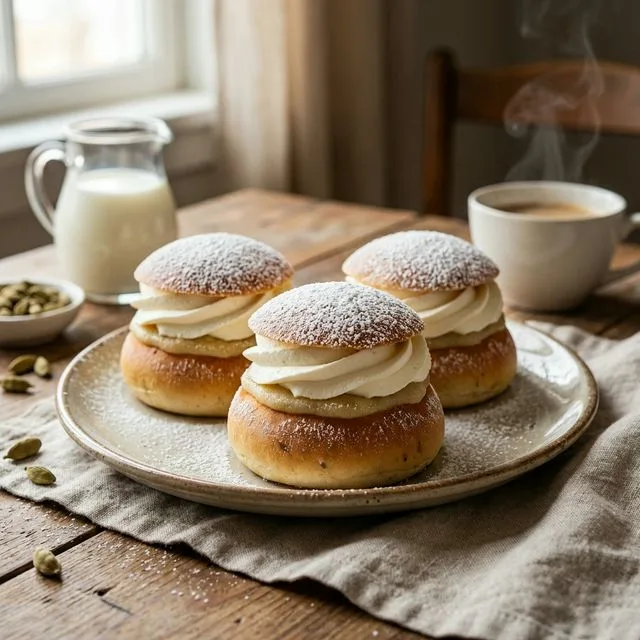
Every January, Swedish bakeries start the countdown. Semlor are coming. By Fat Tuesday (Fettisdagen), the entire country is in full semla mode. Bakeries sell thousands. People debate which bakery makes the best ones. Social media fills with semla photos.
For outsiders, this obsession with a cream-filled bun might seem strange. But semlor represent something deeper than pastry. They're tradition, seasonality, and the Swedish relationship with food all wrapped in one delicious package.
What Is a Semla?
A semla (plural: semlor) is a cardamom-spiced wheat bun, cut open and filled with almond paste and whipped cream, then dusted with powdered sugar. That's the classic version, though modern variations abound.
The bun itself is soft and slightly sweet, flavored with cardamom. The almond paste (mandelmassa) is sweet and rich. The whipped cream is light and fresh. Together, they create a perfect balance of textures and flavors.
Semlor are substantial. One semla is a meal, not a snack. They're rich, filling, and absolutely worth the calories.
The Season
Here's where Swedish tradition gets specific: semlor are seasonal. Traditionally, they're eaten only between Fat Tuesday (the day before Lent begins) and Easter. That's it. A window of about six to seven weeks.
In practice, bakeries now start selling semlor right after Christmas, and the season extends through Easter. But purists insist on the traditional window. Eating semlor outside this period feels wrong to many Swedes, like having Christmas cookies in July.
This seasonality is part of what makes semlor special. They're not available year-round, so when semla season arrives, it's an event. People look forward to it. The first semla of the season is celebrated.
The History
Semlor have been eaten in Sweden since at least the 1600s. Originally, they were a simple wheat bun eaten on Fat Tuesday before the Lenten fast began. Over time, they evolved into the cream-filled version we know today.
The name comes from the Latin "semla," meaning fine wheat flour. In medieval times, wheat flour was expensive, so wheat buns were a luxury reserved for special occasions.
King Adolf Frederick of Sweden famously died in 1771 after eating a meal that included 14 semlor. This probably says more about the entire meal than the semlor specifically, but Swedes remember it. Semlor are serious business.
Making Semlor at Home
The buns are enriched dough, similar to cardamom buns but less sweet. The key is getting them soft and fluffy without being too sweet, since the filling is quite sweet.
The dough uses milk, butter, sugar, cardamom, and flour. It's a fairly standard sweet dough, but the cardamom is essential. Don't skip it or substitute cinnamon. Cardamom is what makes semlor taste right.
Let the dough rise until doubled, shape into buns, let rise again, then bake until golden. They should be soft, not crusty.
The almond paste can be homemade (ground almonds, powdered sugar, a bit of water) or store-bought. Store-bought mandelmassa works fine and saves time. Mix it with some of the scooped-out bun interior to make it lighter and easier to spread.
The cream should be real whipped cream, not stabilized or sweetened too much. Lightly sweetened, whipped to soft peaks. Some add a touch of vanilla.
Assembly: Cut the top off each bun. Scoop out some of the interior (save this for mixing with the almond paste). Fill the hollow with almond paste mixture, pile on whipped cream generously, replace the top, and dust with powdered sugar.
Traditional vs. Modern
The classic semla described above is still the standard. But modern variations have emerged, and they're controversial.
Semeltårta (semla cake) takes semla flavors and makes them into a layer cake. Purists hate it. Others love it.
Semlor with different fillings: Some bakeries offer chocolate semlor, raspberry semlor, or other variations. Again, controversial.
Hetvägg: The old-fashioned way to eat semlor was in a bowl of hot milk (hetvägg means "hot wall"). You'd break up the semla in the bowl and eat it with a spoon. This is rare now but still done by some traditionalists.
Most Swedes stick with the classic version. The traditional semla has been perfected over centuries. Why mess with it?
Where to Buy
During semla season, every bakery in Sweden sells semlor. Quality varies wildly. The best semlor have fresh, soft buns, real almond paste (not too sweet), and fresh whipped cream (not from a can).
Supermarket semlor are convenient but rarely as good as bakery versions. The buns are often dry, the cream is stabilized, and the overall experience is disappointing.
If you're in Sweden during semla season, try semlor from multiple bakeries. Everyone has opinions on which bakery makes the best ones, and the debates are passionate.
The Cultural Phenomenon
Semlor season is a big deal in Sweden. News programs report on semla prices and quality. Food critics review bakery semlor. Social media explodes with semla photos and debates.
This might seem excessive for a pastry, but it reflects something important about Swedish food culture: respect for seasonality and tradition. Semlor aren't just food. They're a marker of the season, a connection to history, and a shared cultural experience.
Everyone eats semlor during the season. Rich and poor, young and old. It's one of those rare foods that crosses all social boundaries.
Making It an Event
Swedes don't just grab a semla and eat it quickly. Semla-eating is often a social occasion. You meet friends for fika and have semlor. You buy semlor to bring home for family dessert. You plan which bakery to try this year.
This transforms a simple pastry into an experience. It's not just about eating. It's about the anticipation, the tradition, the sharing.
Beyond Sweden
Semlor exist in other Nordic countries too, with variations. In Finland, they're called laskiaispulla. In Norway, a similar bun exists but isn't quite as culturally significant as in Sweden.
If you're outside Scandinavia, you can make semlor at home. The ingredients aren't exotic. The technique isn't difficult. You won't get the full cultural experience, but you'll get delicious cardamom cream buns.
The Bottom Line
Semlor are more than pastry. They're a seasonal tradition that brings Swedes together, a connection to history, and genuinely delicious food. The obsession makes sense once you've had a really good semla.
If you're in Sweden between January and Easter, eat semlor. Try different bakeries. Join the debates about which is best. Experience this uniquely Swedish phenomenon.
And if you're not in Sweden, make them at home. Even without the cultural context, semlor are worth making. Just remember: they're seasonal. Save them for late winter and early spring. That's when they taste best.
Keywords: semlor, Swedish pastry, Fat Tuesday, seasonal baking, Nordic traditions, cardamom buns, Lent, Swedish culture
Meta Description: Complete guide to Swedish semlor: history, traditional vs modern variations, baking tips, and why these cardamom cream buns are a seasonal obsession in Sweden.